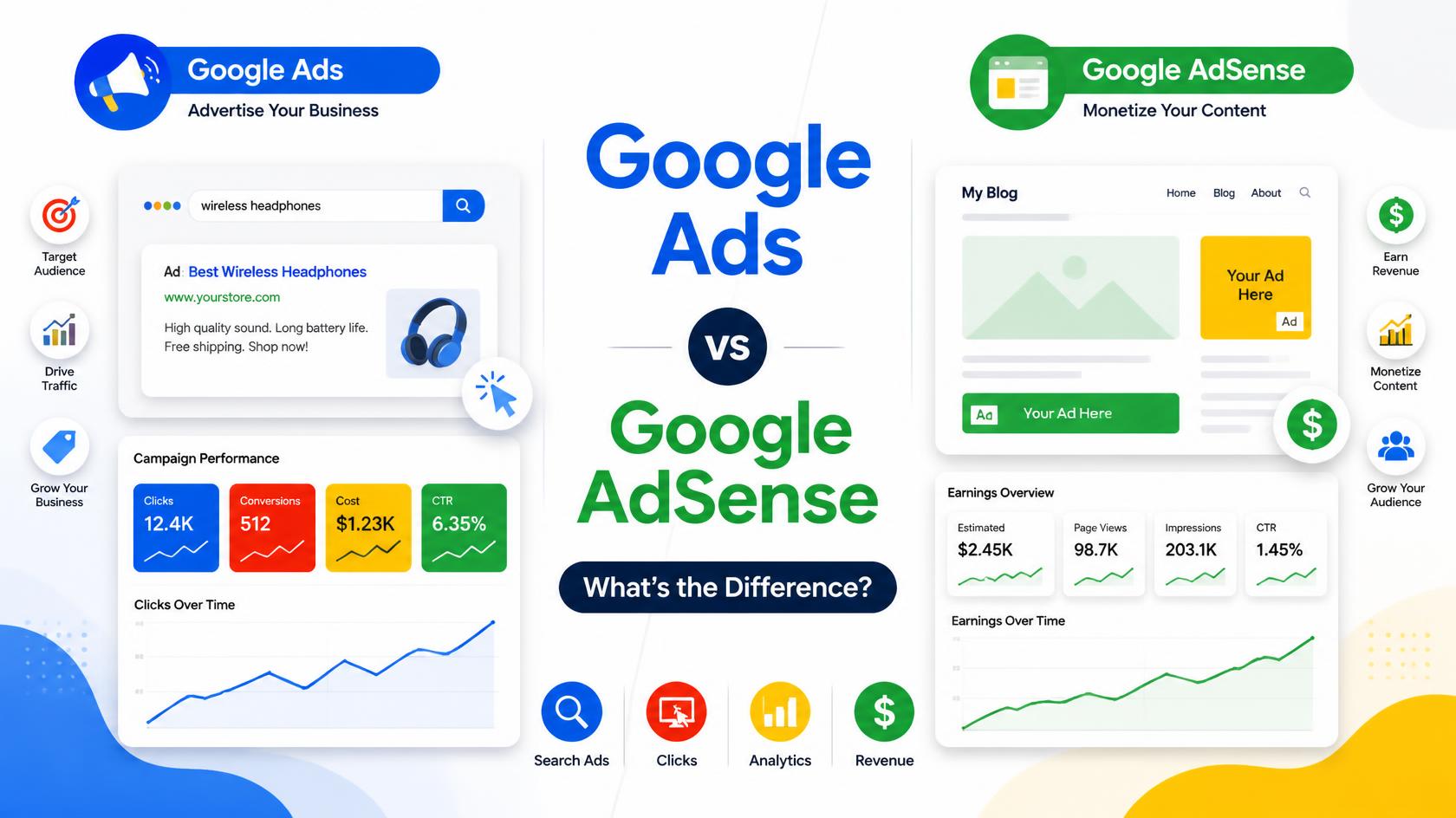
Google Ads vs Google Adsense

Google Ads vs Google AdSense: What’s the Difference?
If you are exploring online advertising or website monetization, understanding Google Ads vs Google AdSense is essential. Although both are Google advertising products, they are designed for two completely different users. Google Ads is primarily for advertisers who want to promote their businesses, while Google AdSense is for publishers who want to monetize their websites.
What Is Google Ads?
Google Ads is Google’s online advertising platform. Businesses use it to display paid advertisements to people who are actively searching for products, services, or information.
For example, a local plumbing company can create a Google Ads campaign targeting searches such as “plumber near me.” Depending on the campaign and bidding strategy, the advertiser may pay for clicks, impressions, conversions, or other measurable actions.
Google Ads can help businesses achieve goals such as:
- Increasing website traffic
- Generating leads
- Driving online sales
- Promoting apps and services
- Building brand awareness
What Is Google AdSense?
Google AdSense is designed for website publishers. It allows eligible website owners to display ads on their digital properties and earn revenue from advertising activity.
For instance, a technology blog can use AdSense to display relevant advertisements alongside its articles. The publisher can potentially earn money when users interact with eligible ads.
AdSense is commonly used by:
- Bloggers
- Content publishers
- News and information websites
- Online communities
- Website owners
However, earnings are not guaranteed. Revenue depends on factors such as traffic, audience, content, advertiser demand, ad placement, and user engagement. Publishers must also follow Google’s policies.
Google Ads vs Google AdSense
| Feature | Google Ads | Google AdSense |
|---|---|---|
| Purpose | Promote a business | Monetize website content |
| Main user | Advertiser | Publisher |
| Money flow | Advertiser pays | Publisher can earn |
| Primary objective | Sales, leads, traffic | Advertising revenue |
| Website required? | Not necessarily | Generally required |
| Main activity | Creating campaigns | Displaying ads |
How Do They Work Together?
Google Ads and AdSense can be part of the same advertising ecosystem. An advertiser may use Google Ads to reach potential customers, while a publisher can use AdSense to monetize website visitors.
This creates a simple relationship: advertisers seek audiences, while publishers provide advertising space.
Which Should You Choose?
Choose Google Ads if you own a business and want more customers, leads, sales, or website visitors.
Choose Google AdSense if you own a qualifying website and want to generate revenue from your existing audience.
For some businesses and publishers, both platforms can be useful—but they solve different problems.
Final Takeaway
The key difference between Google Ads vs Google AdSense is the direction of money and purpose. Google Ads helps you spend money to advertise, whereas Google AdSense helps eligible publishers monetize their content through advertising.
Before investing in either platform, review Google’s latest advertising policies, publisher requirements, costs, and eligibility rules. Results vary by industry, audience, content quality, competition, and campaign or website performance.
Google Ads vs Google AdSense: 10 FAQs
1. What is the main difference between Google Ads and Google AdSense?
Google Ads is designed for advertisers who want to promote products, services, or websites. Google AdSense is designed for publishers who want to monetize eligible website content by displaying advertisements.
2. Is Google Ads free to use?
Creating a Google Ads account is generally free, but advertisers pay when their campaigns generate the billable actions defined by their campaign setup, such as clicks or impressions.
3. Can I make money with Google Ads?
Google Ads itself is an advertising platform, not a publisher-income program. Businesses generally use it to generate leads, sales, traffic, or other marketing outcomes rather than directly earn advertising revenue.
4. Can I make money with Google AdSense?
Yes. Eligible publishers can potentially earn advertising revenue through AdSense. However, earnings are not guaranteed and depend on factors such as traffic, audience, advertiser demand, content, and ad interactions.
5. Do I need a website for Google AdSense?
AdSense is primarily intended for publishers who have eligible online content where Google ads can be displayed. Your property must meet Google’s current eligibility and policy requirements.
6. Which is better: Google Ads or Google AdSense?
Neither is universally better. Google Ads is better for businesses seeking customers, leads, or sales, while AdSense is better suited to eligible publishers seeking to monetize website content.
7. Can I use Google Ads and AdSense together?
Yes. They serve different purposes, so a business can advertise through Google Ads while a website publisher monetizes content through AdSense.
8. How much can I earn with Google AdSense?
There is no fixed income amount. Earnings can vary significantly based on website traffic, niche, visitor location, advertiser competition, ad formats, and user engagement.
9. Does Google AdSense pay for every website visitor?
No. Simply receiving visitors does not guarantee AdSense earnings. Revenue depends on eligible ad activity and other factors, and publishers must comply with Google’s policies.
10. Which one should a beginner choose?
If you are promoting a business, product, or service, start by learning Google Ads. If you own a qualifying content website and want to monetize its audience, explore Google AdSense. Always check Google’s current policies and eligibility requirements before getting started.